A first aid course for every family can save a life, at the pool as well as in everyday life
Le 2026-07-14


When summer arrives, family pools fill up, children play without thinking about danger, and grandparents enjoy the sunshine on the patio. No one expects an accident at the moment it happens. Yet a drowning or a cardiac emergency can occur in just a few seconds, without noise or warning. Here’s why training at least one member of every family in first aid can truly change the outcome of these situations, and how to make this choice easily.
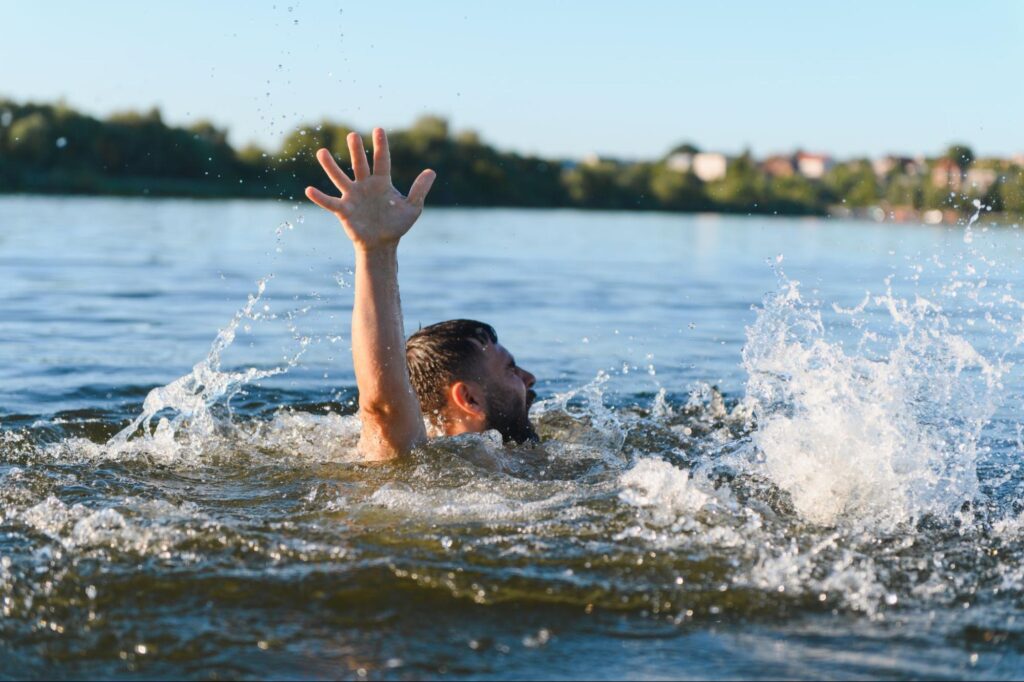
Drowning doesn’t look like it does in the movies. There are usually no screams or dramatic splashes. According to the Institut national de santé publique du Québec, 53 fatal drownings occurred in residential pools between 2009 and 2015, and children aged 0 to 4 alone accounted for 42% of these victims. These tragedies most often occur outside scheduled swimming times, when family members believe the child is somewhere else.
This statistic is not meant to frighten anyone. It simply highlights one reality: every second counts, and a trained adult is not always nearby at the right moment. A first aid course helps bridge that gap.
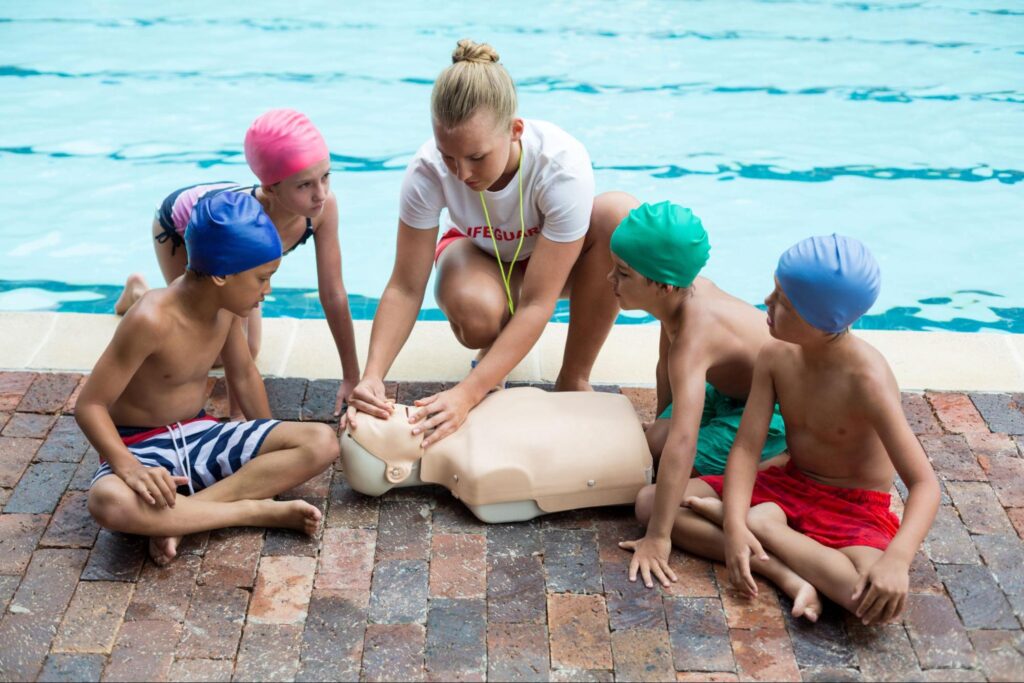
The most common reaction during an emergency is to call 911 and wait. This is an essential first step, but it is not always enough. According to the Heart and Stroke Foundation of Canada, only one in ten people survives an out-of-hospital cardiac arrest in Canada, largely because cardiopulmonary resuscitation (CPR) is not always performed by a witness before emergency responders arrive.
A first aid course teaches clear and easy-to-remember actions: recognizing signs of distress, starting chest compressions, clearing blocked airways, and using an automated external defibrillator (AED) if one is available. These actions do not replace emergency services—they fill the critical waiting time that can make all the difference.
It is not realistic to expect every member of a household to complete full first aid training. The good news is that it isn’t necessary. One trained person, present at the right moment, can provide assistance while others call emergency services or secure the area.
This role naturally belongs to the adult who spends the most time with the children, or the one who organizes family water activities during the summer. What matters is not the number of certified individuals, but rather ensuring that at least one trained person is always available whenever the family is near a pool, a lake, or even at home.
Many families believe they are fully protected when they are not. Here are the most common mistakes:
| Situation | What It Means | What to Do |
| Child out of sight near the pool | Immediate danger, even within seconds | Check the pool first, before searching anywhere else |
| Person found motionless in the water | Possible life-threatening emergency | Remove the person from the water, call 911, begin CPR if trained |
| Adult suddenly collapses | Possible cardiac arrest | Call 911 and begin chest compressions immediately |
| Child coughing heavily after swallowing the wrong way | Airway is probably still clear | Stay calm, encourage coughing, and monitor the situation |
If your family does not yet have someone trained in first aid, here is a simple way to get started:
Right away: identify who in your immediate family would be the best person to take a first aid course this season.
When supervision is enough: for minor incidents such as a small fall with no apparent injury, careful observation over the following minutes is generally appropriate.
When professional training becomes essential: as soon as a young child has access to a swimming pool, or a loved one has cardiac risk factors, first aid training stops being just a good idea and becomes a priority.
Beyond training, a few simple habits can significantly reduce the risks. The Government of Quebec reminds homeowners that every residential swimming pool must be enclosed by a secure fence with a self-closing and self-latching gate. Put away floating toys after swimming to prevent a child from trying to retrieve them alone, and avoid relying solely on life rings or inflatable arm bands as safety measures.
The best protection is always the combination of three key elements: a safe environment, constant supervision, and at least one person capable of responding in an emergency.
No one plans for an emergency. That is precisely why a first aid course is so valuable: it prepares a trusted person to stay calm and act effectively when it matters most. It is a responsible decision that helps protect the entire family, both at the pool and in everyday life.
If you are wondering where to start or which type of training is best suited for your family, our team can help you understand your options and choose the program that meets your needs.
Contact Us for advice tailored to your situation.
No. Generally, having just one well-trained person in the family is enough to respond effectively in an emergency, provided that person is present during higher-risk activities, such as swimming.
Several courses are available starting in adolescence. The minimum age depends on the type of course, but in most cases a parent or guardian should be trained first.
No. It also covers choking, cardiac emergencies, falls, severe allergic reactions, and many other emergencies that can occur at home or while away.
The validity period depends on the type of training, but periodic renewal is generally recommended to keep your skills up to date and stay current with changes in recommended techniques.
No. A fence reduces the risk of unsupervised access, but it does not help if an emergency occurs despite these precautions. First aid training remains essential for responding effectively.



