Hypothermia: symptoms, first aid, and prevention
Le 2026-11-11

A snowshoeing hike that goes on longer than expected, soaked mittens, a rising wind. The body then loses heat faster than it can produce it.
Hypothermia begins when the oral temperature drops below 35 °C and can become a medical emergency. The appropriate steps are simple: move the person to shelter, remove wet clothing, cover them, warm them gradually, and call 9-1-1 if they become confused or stop shivering.
Hypothermia is a drop in the body’s core temperature. According to Québec.ca, a person is experiencing hypothermia when their oral temperature drops below 35 °C. Before reaching this threshold, they may feel uncomfortable, while their temperature remains slightly above 35 °C.
According to Health Canada, normal body temperature is approximately 37 °C. A drop of one or two degrees in core temperature already increases the risk of harmful effects.
The body responds to cold by shivering. This reflex reaction increases heat production, but it only lasts a few hours because the muscles’ energy reserves become depleted. Hypothermia is then accompanied by muscle weakness and drowsiness.
Hypothermia affects the temperature of the entire body. Frostbite is the localized freezing of tissue, mainly affecting the fingers, toes, ears, or nose. Both conditions can occur at the same time. Visit our page on first aid for frostbite to learn more.
Prolonged exposure to cold is the main cause. Wind, moisture, and wet clothing accelerate heat loss.
According to Environment Canada, wind removes the layer of heat surrounding the skin. A wind chill of -10 to -27 carries a risk of hypothermia and frostbite if you remain outdoors for a long time without adequate protection. At lower temperatures, exposed skin can freeze in just a few minutes.
Québec.ca considers the risk of hypothermia serious at a wind chill of -48, and high at -55 or lower.
Alcohol makes the situation worse. According to the Public Health Agency of Canada, substance use, particularly alcohol consumption, is reported in nearly one-quarter of cold-related injury cases treated in emergency departments.
Living in a poorly insulated or unheated home, for example during a power outage, is also a risk factor.
Some people lose body heat more easily or are more exposed to cold. Québec.ca identifies the following groups:
Certain medications, including beta-blockers, can increase sensitivity to cold. Ask a healthcare professional for advice. According to the Public Health Agency of Canada, cold weather causes an average of 129 deaths per year in Canada, and approximately seven out of ten deaths occur among adults aged 50 and older.
For younger children, visit our page on first aid for children.
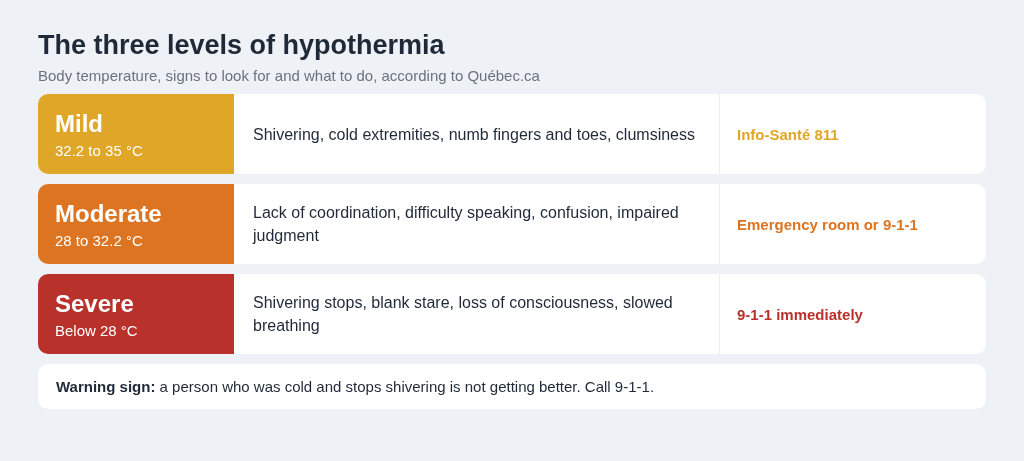
Québec.ca identifies three levels of hypothermia.
The symptoms of hypothermia vary depending on its severity. The following table presents the oral temperature ranges published by Québec.ca.
| Severity | Oral temperature | Signs and symptoms |
|---|---|---|
| Mild | 32.2 to 35 °C | Shivering, cold extremities (ears, nose, cheeks, fingers, toes), numbness causing clumsiness |
| Moderate | 28 to 32.2 °C | Lack of coordination, difficulty speaking, confusion, unusual behaviour, impaired judgment, rapid breathing and pulse |
| Severe | Below 28 °C | Shivering stops, vacant stare, loss of consciousness, slowed breathing, respiratory or cardiac arrest |
Health Canada also describes three stages. During the first stage, core temperature drops by one or two degrees: shivering, goosebumps, numb hands, rapid and shallow breathing, and fatigue. During the second stage, core temperature drops by two to four degrees: intense shivering, slow movements, mild confusion, pale skin, and blue lips, ears, fingers, and toes.
To identify this second stage, ask the person to touch their little finger with their thumb. If they cannot do so, it means their muscles are not functioning properly. During the third stage, core temperature drops below 32 °C, shivering stops, and walking and speaking become difficult. Confusion and, sometimes, memory loss may also occur. The thresholds vary slightly between sources, but confusion and the cessation of shivering remain emergency warning signs. Severe hypothermia can lead to death.
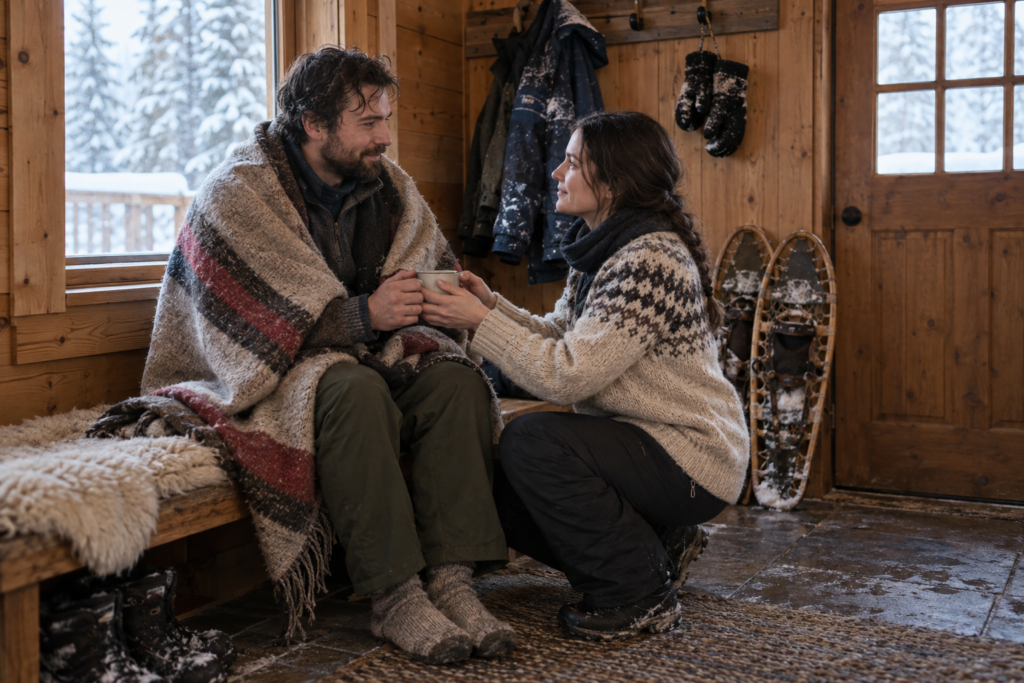
Move the person to a sheltered, dry place, cover them, and then warm them gradually.
Move the person to shelter and handle them gently. According to Québec.ca and the Canadian Red Cross, here are the steps to take while waiting for emergency services or professional medical advice:
For moderate or severe hypothermia, Québec.ca specifies that it is generally preferable to begin rewarming the chest rather than the extremities.
Do not massage the skin or allow the person to smoke or drink alcohol, as this can cause their temperature to drop further. It is always necessary to consult a doctor or another healthcare professional, even in cases of mild hypothermia.
Call 9-1-1 immediately in cases of severe hypothermia: cessation of shivering, vacant stare, loss of consciousness, very slow or absent breathing. Follow the emergency dispatcher’s instructions until help arrives.
If moderate symptoms are present, such as confusion or lack of coordination, the person needs immediate medical attention according to Health Canada. Take them to the emergency department or call 9-1-1. For mild symptoms, contact Info-Santé 811. If you are unsure about the severity, do not wait: call 811 or 9-1-1.
Sudden immersion in cold water initially causes cold shock: an involuntary deep breath followed by rapid breathing that is difficult to control. According to the Lifesaving Society, muscle cooling then affects movement, well before hypothermia develops. A personal flotation device helps keep a person afloat.
After getting out of the water, wet clothing and wind continue to cause heat loss. Quickly protect the person from the cold, remove their wet clothing, cover them, and monitor their condition. Call 9-1-1: they must be assessed by a healthcare professional.
Outdoor activities in remote areas require special preparation. Our wilderness and remote first aid training covers these situations.
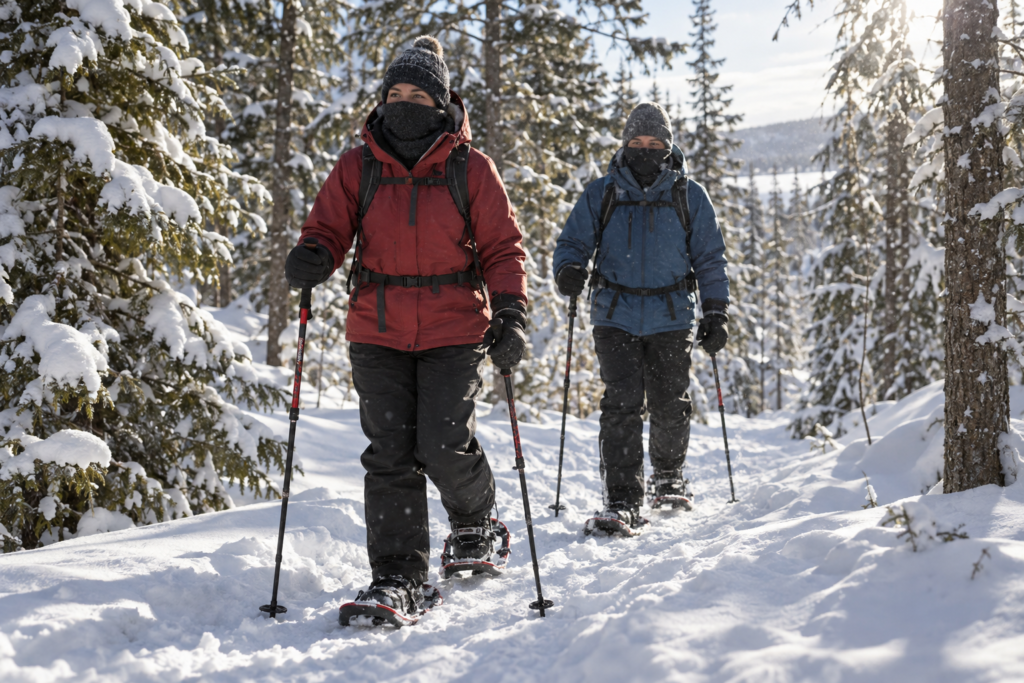
Cover the head, neck, and hands, and wear several layers of clothing.
Prevention involves protecting the body from cold, wind, and moisture. According to the Canadian Red Cross and Québec.ca, here are the recommended measures:
In Quebec, Environment Canada issues an extreme cold warning when the temperature is expected to reach -38 °C, or the wind chill reaches -38, for at least two hours. When travelling by car, keep a charged cell phone, water, food, and blankets in case of a breakdown.
Skiers and snowboarders can also read our article about skiing and snowboarding accidents.
Knowing how to recognize these signs and take the appropriate action can be learned. Impact Santé+ has been a Canadian Red Cross training partner for more than 25 years. Explore our first aid training programs.
According to Québec.ca, hypothermia occurs when oral temperature drops below 35 °C, while normal body temperature is approximately 37 °C.
Hypothermia is a drop in the temperature of the entire body. Frostbite is the localized freezing of the skin and tissues, often affecting the fingers, toes, ears, or nose.
Yes. A poorly insulated home or one without heating, for example during a power outage, increases the risk, especially for older adults and infants. During extreme cold, Québec.ca recommends keeping the indoor temperature at a minimum of 19 °C.
If the person is conscious, offer small sips of a warm, sweet drink without alcohol. Also avoid caffeine.
It depends on the wind chill, humidity, and the individual, and there is no fixed timeframe that applies to everyone. As a reference, Environment Canada indicates that exposed skin can freeze within 10 to 30 minutes at a wind chill of -28 to -39.



